 ▾
▾Bluetooth 5.3 brought improvements for IoT devices like smartwatches and sensors. It offers lower latency, higher energy efficiency, and better connection stability. However, it's not the only one, with its close relative Bluetooth 5.4 and the upcoming Bluetooth 6.0. Join us as we explore how it differs from previous versions and what to expect in the future.
Bluetooth is a technology that has become an indispensable part of our daily lives over the past two decades. Each new version brings improvements that further advance its capabilities. In 2021, the Bluetooth SIG (Special Interest Group) introduced Bluetooth 5.3. What does it bring and how does it differ from its predecessors?
What is Bluetooth 5.3?
Bluetooth 5.3 is one of the latest iterations of Bluetooth wireless technology, building on the foundations of previous versions, especially Bluetooth 5.0, 5.1, and 5.2. This version focuses on improving connection efficiency, reliability, and performance, particularly for low-power devices such as wearables, smart sensors, or Internet of Things (IoT) devices.
While at first glance the changes might seem more evolutionary than revolutionary, they bring significant improvements for specific use scenarios. For example, it improves connection management, reduces latency, and increases energy efficiency. Additionally, it introduces features that make it easier for developers to create more advanced applications.
What new features did Bluetooth 5.3 introduce?
Bluetooth 5.3 brought improvements that made wireless communication more efficient, stable, and secure, particularly for low-power devices such as smartwatches, smart home sensors, and fitness trackers.
Optimized advertising packets
One of the key improvements was the optimization of broadcasting periodic advertising packets. This allows devices to skip unnecessary data, saving energy and extending battery life. This is useful, for instance, for smartwatches, which can remain charged for longer.
Quick mode switching and better channel selection
Another feature was the ability to quickly switch between low-power and performance modes. For example, headphones can save energy at rest but switch to full performance immediately during an incoming call to ensure a smooth, delay-free conversation.
Bluetooth 5.3 allows devices to assess the quality of communication channels. This enables them to choose the least interfered ones, ensuring a more stable connection even in environments full of other devices.

Higher security
Security has been enhanced by allowing the setting of the minimum encryption key size right at the beginning of a connection. This is great for devices processing sensitive data. To make the standard more robust, Bluetooth 5.3 removed the obsolete Alternate MAC and PHY feature, which was hardly used anymore, simplifying and making the entire system more reliable.
Overall, Bluetooth 5.3 brought lower latency, greater interference resistance, and more efficient data transfer while remaining fully compatible with older versions.
Bluetooth 5.3 vs 5.4: How do they differ?
Bluetooth 5.4, introduced in 2023, brought significant improvements that pushed the possibilities of wireless communication, especially for large IoT networks, retail, and secure communication.
Bidirectional communication without connection
One of the biggest benefits is the Periodic Advertising with Responses (PAwR) feature. With it, central devices like a gateway can communicate with thousands of endpoint devices simultaneously, without the need to establish a classic Bluetooth connection.
This system operates in precisely timed slots, ensuring low latency and energy savings. It found its use in warehouses or industrial IoT networks, where multiple sensors or devices are synchronized.

Advertising data encryption and security
Bluetooth 5.4 enabled advertising data encryption for the first time, which was previously unprotected. This feature, called Encrypted Advertising Data (EAD), protects communication from eavesdropping and tampering, which is crucial for retail or industrial applications. It's possible to encrypt the entire message or just a part of it, adding flexibility and enhancing security.
Moreover, the new LE GATT Security Level characteristic allows devices to verify if a connection is secure enough before transmitting sensitive data. This reduces the risk of data leaks and ensures that data only travels over sufficiently secured channels.
Better stability in noisy environments
Thanks to Advertising Coding Selection, devices can choose the level of error correction when broadcasting advertising packets. This increases the range and stability of the connection even in places with many interfering signals.
Given the build of Bluetooth 5.4, you will encounter it primarily in industries where it operates with thousands of devices simultaneously.
How does it differ from previous versions?
To better understand the benefits of Bluetooth 5.3, let's look at how it differs from its predecessors - Bluetooth 5.0, 5.1, and 5.2.
Bluetooth 5.0: The foundation of the modern era
Bluetooth 5.0, introduced in 2016, was a significant leap forward. It brought double the data transfer speed (up to 2 Mb/s) compared to Bluetooth 4.2, a fourfold range (up to 240 meters under ideal conditions), and eight times the message transfer capacity in Low Energy mode.
This version focused on supporting IoT and laid the groundwork for the mass proliferation of smart devices. However, some features, such as precise positioning, weren't fully developed yet.
Bluetooth 5.1: More precise localization
Version 5.1, released in 2019, added features for more accurate device localization. With Direction Finding technology, Bluetooth 5.1 could determine the signal's direction, enabling more accurate indoor navigation or finding lost devices. This version also improved connection stability and data transfer efficiency.
Bluetooth 5.2: The audio revolution
Bluetooth 5.2, launched in 2020, introduced LE Audio technology, changing how devices transmit audio. LE Audio allowed for higher audio quality with lower energy consumption and added support for features like audio sharing between multiple devices (e.g., streaming music to multiple headphones simultaneously). Additionally, it introduced the LC3 codec, which offers better audio quality at lower data rates.
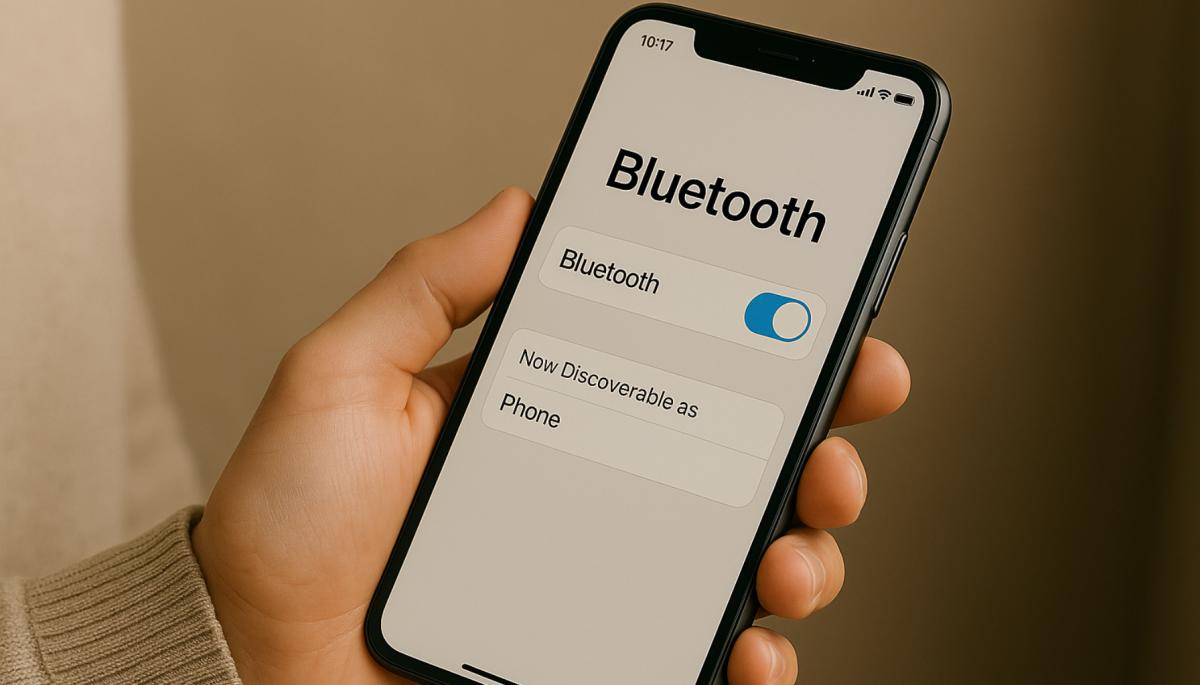
The future of Bluetooth: What does Bluetooth 6.0 bring?
Bluetooth 5.3 will soon be replaced by the newer Bluetooth 6.0, introduced in September 2024. This new version brings a change in wireless communication with Channel Sounding technology. This function enables devices to determine not only the direction but also the distance between them with centimeter accuracy, similar to Ultra Wideband (UWB).
If you lose your keys, with Bluetooth 6.0 you will find them faster and more accurately than ever before. Similarly, digital keys for your car or home doors will be more secure as they will only unlock when you are truly nearby.
Faster, more efficient, smarter
New innovations such as Decision-Based Advertising Filtering and Monitoring Advertisers speed up pairing and save energy by intelligently searching and filtering signals in crowded areas. The improved Isochronous Adaptation Layer ensures smoother transfer of time-sensitive data, such as when streaming music or calls over Bluetooth headphones.
When will we see it?
Although Bluetooth 6.0 was officially introduced in 2024, it's not widely available in 2025. Manufacturers need time to integrate the new standard into hardware and software, but the first products featuring this technology are expected later this year.
Where does the internet really flow? Hair-thin fibers connecting continents

The idea that the internet flows mainly through the air is a myth. The entire technological world relies on heavy hardware buried in the sand of the seas. In the article, we will examine the technology of submarine cables. You will learn how optical fibers work, what laying them from ships entails, and how the depths of the oceans have become a geopolitical battlefield.
Why Subscription Fatigue Troubles Us and How to Stop Money Disappearing in 4 Steps

How much money leaves your account each month for online services? The recurring payment model often exhausts people because numerous small amounts gradually add up to unexpectedly high totals. The text relies on fresh data from 2026, reveals the vast difference between our estimates and reality, and offers four specific steps to help you better control your expenses.
Weak Wi-Fi? Internet through sockets improves stability without drilling

Do you have a 'dead zone' on a floor or in a bedroom where Wi-Fi doesn't reach, and drilling into walls is not an option? Learn how to use the electrical wiring already in your walls to transmit internet over the electrical network. In this article, we'll show you how a modern powerline adapter works, why it can handle 4K streaming and gaming, and what to watch out for with older aluminum wiring.
Wi-Fi in the car. How to create a connection for the whole crew?

Stable internet connection in the car is no longer just for the owners of the latest electric cars. Having your own car Wi-Fi is useful for anyone who wants to entertain kids in a traffic jam or needs reliable data for navigation. There are several options on how to set up a network in an older car as well. We'll show you how to get it all working and which variant will save you the most nerves and money on data transfers.
Why Does Video Lag Even with Fast Internet? Megabits Aren't Everything

Do you have lightning-fast internet at home, but your YouTube video or Netflix show keeps pausing? While fast internet is essential, it often isn't enough for smooth video playback. An empty buffer that can't feed your device with data quickly enough is often the culprit. Discover how to find weak spots in your network and what to do when the provider's theory doesn't match practice.
What are AI agents and how can they help you today?

AI agents are no longer just an experiment of tech companies. They are increasingly appearing in tools we use every day and can independently plan, decide, and execute tasks. We explain what an AI agent is, how it differs from a regular chatbot, and where it can actually save you time and energy.